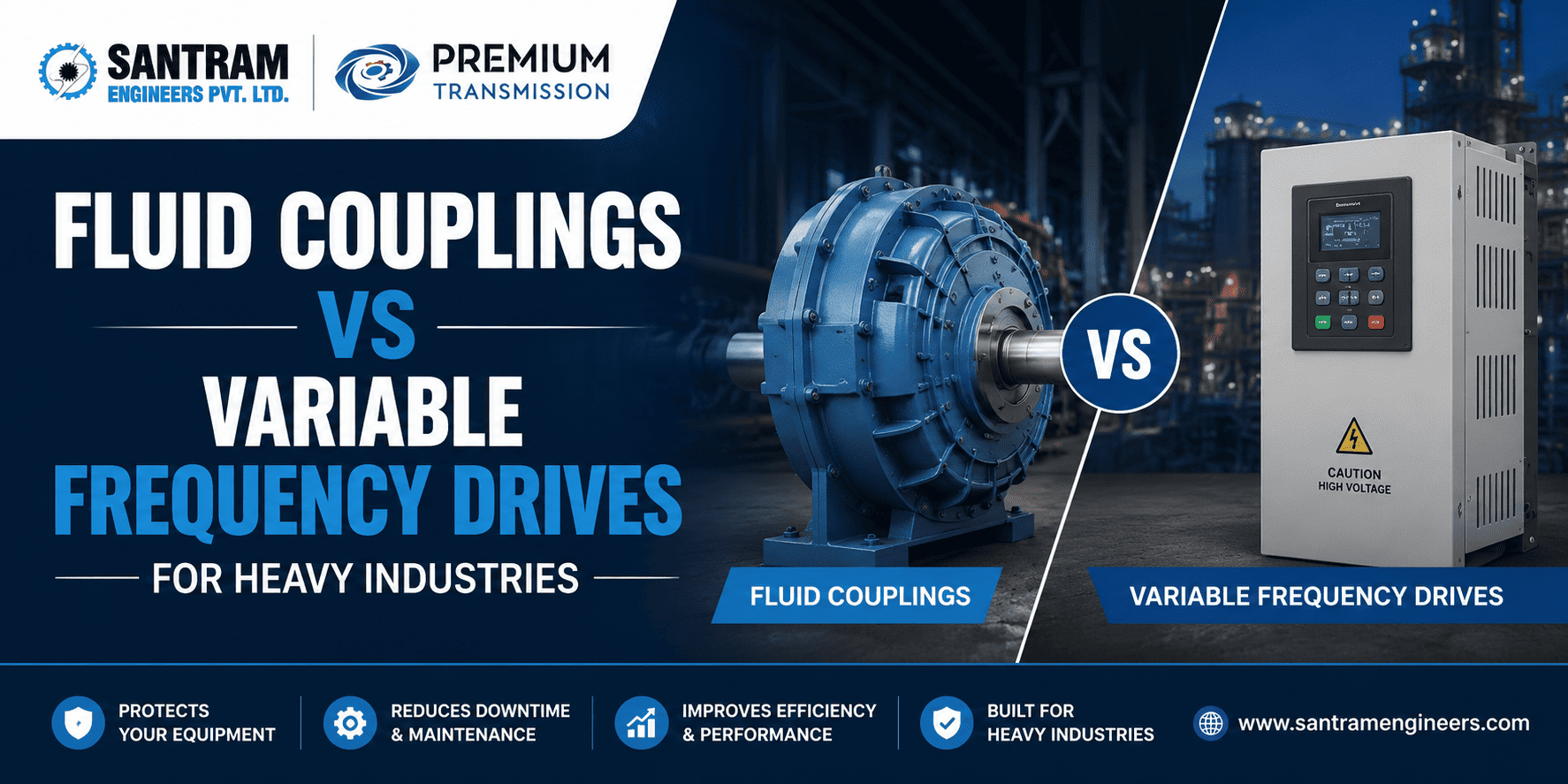
Fluid Couplings vs Variable Frequency Drives for Heavy Industries

Plant engineers face a high-stakes decision when upgrading factory drive systems today. You must choose between raw mechanical resilience and advanced electronic speed control to run your equipment.
Selecting the wrong drive technology leads to catastrophic machine failures and burned-out motors. This results in lakhs of rupees lost to unplanned downtime across Indian manufacturing floors. In 2026, making a smart and financially grounded choice is more critical than ever.
This guide breaks down the performance limits, survival rates, and true lifetime costs of both drive systems. We will help you cut through the marketing hype. You will gain the technical insights needed to make a bulletproof operational choice for your plant.
Direct Answer for Quick Reference
What is the difference between fluid couplings and Variable Frequency Drives (VFDs) in industrial applications? Fluid couplings rely on hydrodynamic power to cushion harsh impacts and ensure heavy equipment starts up smoothly. VFDs control motor speed electronically by altering frequency and voltage. Heavy Indian industries typically prefer mechanical drives for their rugged protection against harsh environments and erratic power grids.
Pick the Safest Drive for Heavy Machinery
Industrial manufacturing has moved far beyond the days of harsh direct-drive setups. Older systems forced raw power into machines instantly. This caused immense physical stress on every component during the initial startup phase.
Today, engineers rely on controlled-start mechanisms to protect huge rotating loads. Two dominant forces lead the market for this job. You have hydrodynamic power on the mechanical side and electronic frequency control on the digital side.
Your choice between these two directly impacts your daily electricity bill and production output. It also determines the lifespan of every surrounding piece of machinery on your factory floor.
Both technologies offer soft start capabilities to ease the strain on your motors. However, they achieve this goal through completely different physical principles and engineering designs.
How Hydrodynamic Power Absorbs Severe Shock Loads
Mechanical drives rely on the kinetic energy of oil to transfer torque safely. The core mechanism is remarkably straightforward but highly effective in heavy applications.
An impeller connects to your drive motor and pumps hydraulic fluid outward. A separate turbine runner receives this fluid and turns the driven equipment.
There is a physical gap between these two internal components. This physical separation is why fluid couplings remain the standard for mechanical shock absorption globally.
1. Defend Against Catastrophic Belt Conveyor Jams
Heavy material handling often leads to sudden conveyor belt jams. A large rock or material overload can stop a fully loaded belt instantly.
When this occurs, the physical slip inside the hydraulic fluid engages right away. The fluid medium allows the electric motor to continue spinning freely even if the load stops dead.
This action prevents an immediate thermal overload in your electrical system. It completely protects the electric motor from burning out under locked-rotor conditions.
2. Isolate Damaging Vibrations During High Torque Startups
Starting a massive ball mill or stone crusher generates intense mechanical vibrations. These chaotic vibrations can tear standard rigid metal couplings apart in a matter of months.
The physical gap inside the coupling housing acts as a powerful dampening cushion. The hydraulic oil absorbs these harsh energy waves completely before they travel further.
This stops severe operational vibrations from travelling backwards into the motor shaft. Your motor bearings stay completely protected during the most stressful part of the daily operation.
3. Shield Your Expensive Industrial Gearbox from Wear
A drive system is only as strong as its most delicate moving part. You must position the mechanical coupling as a sacrificial safety buffer for your entire drive train.
Sudden load spikes and torque surges are absorbed entirely by the hydraulic fluid. This prevents the raw kinetic shock from reaching the metal gear teeth inside the transmission.
This specific protective action drastically extends the operational life of your industrial gearbox. You save significant replacement costs and avoid weeks of extensive factory downtime.
4. Prevent Motor Overheating with Built-In Thermal Protection
Extreme overloads generate significant amounts of heat as the coupling slips continuously to protect the motor. Engineers designed a brilliant mechanical failsafe to handle this danger.
Most modern hydrodynamic drives feature fusible plugs built directly into the casing. When the internal oil temperature spikes beyond a safe operational limit, the plug simply melts.
This harmlessly drains the fluid and instantly disconnects the motor from the driven load. The motor spins safely under zero load while your team investigates the mechanical jam.
Do Variable Frequency Drives Survive Rugged Factory Floors
The Variable Frequency Drive represents the pinnacle of modern electronic motor control. A VFD modifies the incoming electrical voltage and frequency to dictate the exact speed of an AC motor.
It does not use physical oil or mechanical separation to protect the system. Instead, it relies on complex microprocessors and solid-state electronics to manage precise power delivery.
Precision Electronic Speed Control Explained
VFDs shine in clean settings that depend on absolute precision and frequent speed tuning. They allow machine operators to dial in the exact RPM needed for specific product batches.
This makes them highly dominant in automated process control lines and pharmaceutical plants. They are fantastic for lighter-duty applications like water pumping stations and commercial HVAC systems.
Their ability to slowly ramp up an electric motor over a custom timeframe is a major technological advantage. They provide a highly customised start cycle for sensitive and delicate machinery.
Hidden Vulnerabilities in Harsh Environments
However, electronic switchgear struggles terribly in abrasive industrial settings. Dust and airborne particles are the natural enemies of sensitive microprocessors and cooling fans.
Placing a standard VFD inside a cement clinker unit is a recipe for absolute disaster. Airborne dust easily clogs the electronic cooling systems and causes rapid thermal shutdown.
When the internal temperature rises, the VFD protects itself by tripping and stopping the motor. This halts your entire production line until the electronic panel cools down completely.
The Hidden Cost of Specialised Cleanrooms
To make VFDs survive in heavy industry, plants must alter their physical architecture. You cannot mount a sensitive electronic drive next to a dusty stone crusher.
Facilities must build expensive and fully enclosed cleanrooms to house the electronic panels safely. These rooms require continuous air conditioning to keep the ambient temperature below thirty degrees Celsius.
This adds architectural complexity to a harsh factory environment. It also adds a permanent layer of energy consumption just to keep the drive systems cool during Indian summers.
Compare Capital Expense With Lifetime Operational Costs
Procurement teams must shift their focus to the total cost of ownership. You cannot simply look at the initial price tag when upgrading a critical factory line.
A realistic financial contrast requires evaluating the daily running costs over a ten-year lifespan. Let us break down the operational metrics that affect your bottom line.
1. Evaluate Upfront Procurement and Installation Outlays
The high initial purchase price of a high-capacity VFD is incredibly substantial. This capital cost multiplies quickly when you factor in the required hidden setup accessories.
You must purchase specialised shielded cables to prevent severe electrical interference. You also need heavy harmonic filters and dedicated cooling panels to keep the factory grid safe.
In contrast, mechanical drives present a much lower upfront capital cost. Installing fluid couplings requires standard mechanical alignment without any complex electrical panel upgrades.
2. Calculate Long-Term Maintenance and Component Replacements
The daily maintenance realities of both systems look entirely different for your plant team. VFDs require specialised electronic technicians equipped with proprietary diagnostic software to troubleshoot minor faults.
Replacing a blown-inverter module requires hiring expensive external electrical contractors. It also requires waiting weeks for proprietary microchips to ship from the original manufacturer.
Mechanical units offer a much simpler and cheaper service path. Your existing in-house mechanic can perform standard oil top-ups and seal replacements using basic hand tools.
3. Factor in Thermal Dissipation and Energy Efficiency
The energy consumption debate is a major talking point for corporate plant managers. VFDs genuinely save significant electrical power at low or fractional operating speeds.
They only draw the electrical current needed to move the load at that specific moment. This drastically lowers your monthly utility bills during slow or partial production runs.
Mechanical drives do generate heat through normal slip losses at full speed. They require dedicated thermal management strategies to run efficiently under continuous heavy loads.
4. Assess the True Cost of Unplanned Production Downtime
The cheapest drive system becomes the most expensive the minute it breaks down unexpectedly. You must calculate the hourly cost of a stopped cement kiln or a halted mining conveyor.
Electronic failures are often sudden and catastrophic, requiring days of troubleshooting to identify a bad sensor. During this time, your production output drops to zero.
Mechanical systems usually fail gracefully over time. A slow oil leak gives your maintenance team plenty of warning to schedule repairs during a planned weekend shutdown.
Drive Technology Comparison Overview
| Feature | Fluid Couplings |
Variable Frequency Drives |
| Shock Load Protection | Excellent physical dampening | Minimal physical protection |
| Installation Complexity | Low requires standard alignment | High requires cleanrooms and cables |
| Upfront Capital Cost | Highly economical | Expensive capital investment |
| Speed Control | Fixed speed with soft start | Infinite variable speed control |
| Maintenance Needs | In-house oil and seal changes | Specialised electronic contractors |
| Harsh Environment Survival | Thrives in dust and high heat | Requires climate control |
Why Premium Fluid Couplings Remain Essential in Mining and Steel
Extreme heavy-duty sectors demand ruggedness above all other features. In the Indian mining and steel industries, mechanical durability vastly outweighs electronic complexity.
These harsh environments push machinery to its absolute physical breaking point every single day. You need robust equipment that can take a beating and keep the production line spinning.
Navigate Line Voltage Fluctuations and Harmonics
Erratic power grids are a daily reality in heavy industrial zones across the country. Extreme voltage dips and sudden power surges happen frequently during peak hours.
VFDs are highly sensitive to these minor fluctuations and will frequently trip to protect their circuits. This immediately halts your production line until the regional power grid stabilises.
They also introduce unwanted harmonic distortion back into your sensitive plant grid. Mechanical drives are completely immune to poor power quality and keep running regardless of electrical noise.
Simple Mechanical Reliability Beats Software Issues
Fail-safe operation is the absolute highest priority in remote industrial locations. A tripped electronic sensor or an unexpected software glitch can halt a steel rolling mill for days.
You cannot afford to wait for a digital software update when raw material is backing up on the floor. Mechanical power systems bypass these frustrating digital hurdles entirely.
Installing premium fluid couplings delivers predictable and brute-force reliability. These mechanical units keep your main assembly lines running smoothly while shielding your plant budget from costly software glitches.
Empower In-House Mechanics Over External Specialists
Relying on external contractors for daily operations is a huge risk for heavy plants. When an electronic drive fails, you are at the mercy of an outside technician’s schedule.
Mechanical drives keep the power of repair directly in your hands. An experienced plant mechanic can diagnose a worn bearing or a degraded seal visually within minutes.
They can strip down a mechanical coupling on the factory floor and rebuild it using local parts. This self-reliance drastically reduces your repair timeline and boosts overall factory uptime.
Frequently Asked Questions
1. Which is better for high torque startups, a VFD or a fluid coupling?
Mechanical drives are superior for massive high-torque startups like crushers and ball mills. The internal oil serves as a protective buffer that dampens heavy startup impacts, shielding the motor and connected equipment from hairline fractures and fatigue.
2. Can I use both a VFD and a mechanical coupling together?
Yes, you can combine them, but it is rarely cost-effective. A VFD already provides soft-start electrical capabilities, making the mechanical shock absorption redundant for simple applications. Engineers usually select one technology based on whether the plant needs speed control or pure mechanical protection.
3. How does a hydrodynamic drive protect an industrial gearbox?
It physically separates the electric motor from the transmission using a gap filled with hydraulic oil. When a sudden load spike occurs, the oil absorbs the kinetic shock instead of transferring that harsh force directly into the metal gear teeth.
4. Why do cement plants prefer mechanical drives over electronics?
Cement plants generate massive amounts of abrasive airborne dust and operate at extremely high temperatures. Mechanical drives thrive in these harsh conditions, while sensitive electronic VFDs overheat easily and require expensive air-conditioned cleanrooms to survive.
5. Do fluid couplings save energy compared to VFDs?
VFDs are far more energy-efficient when a machine needs to run at fractional or variable speeds. However, for heavy machinery that runs continuously at constant maximum speed, a properly sized mechanical coupling is highly efficient and costs much less to install.
6. What happens when a mechanical drive overloads entirely?
When the driven equipment jams completely, the coupling will slip to protect the motor. If the overload continues, the internal oil heats up rapidly until a built-in fusible plug melts, draining the fluid and safely disconnecting the motor from the jammed load.
7. Are premium fluid couplings difficult to maintain internally?
No, they are incredibly simple to maintain compared to complex electronics. Routine maintenance strictly involves monitoring oil levels, checking for exterior leaks and performing scheduled fluid changes, which any standard in-house mechanic can handle easily.
Make the Right Choice for Your Next Drive Upgrade
Choosing the correct power transmission technology comes down to assessing your plant environment realistically. You must thoroughly weigh the need for digital speed precision against the need for rugged survival.
If you require infinite speed changes in a highly controlled, clean environment, invest in a VFD. If you need brute strength to survive abrasive dust, extreme heat, and massive shock loads, choose pure mechanical power.
Your heavy industrial operations deserve the best protective equipment available on the market today. Premium fluid couplings remain the most cost-effective and reliable way to shield your motors and gear setups.
Stop guessing with your critical plant infrastructure and capital budget. Consult directly with the power transmission experts at Santram Engineers today.
We will carefully help you match the exact torque transfer needs of your facility with the right technology. Call us at +91 96247 39393 or email sales@santramengineers.com to book your free technical consultation and secure your factory floor.