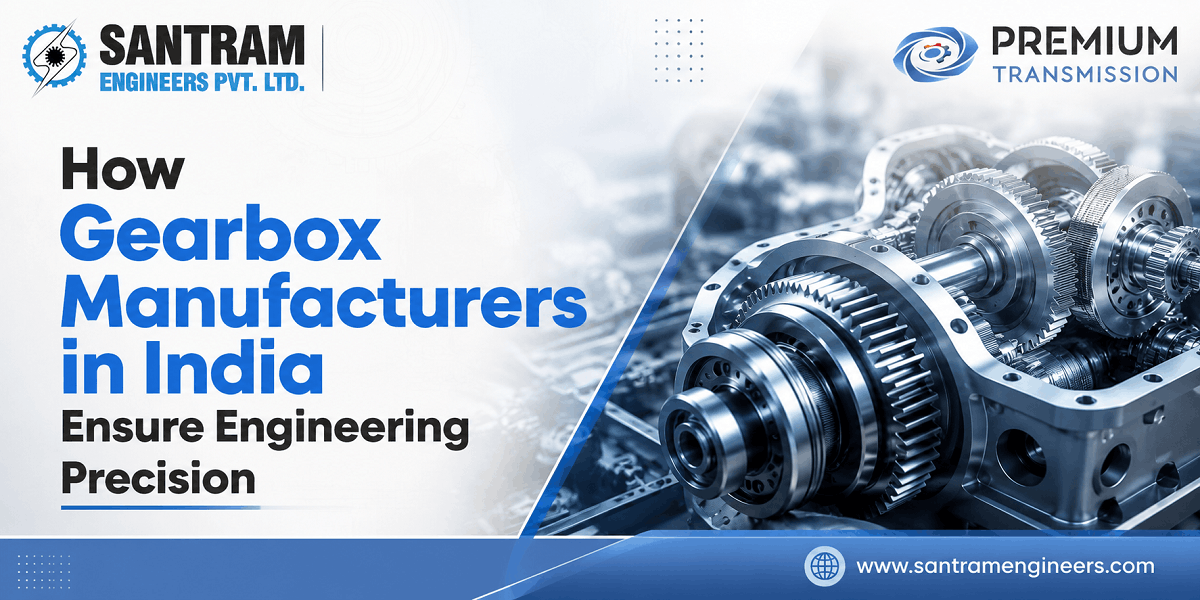
How Gearbox Manufacturers in India Ensure Engineering Precision

When buyers compare gearbox manufacturers in India, price is usually the first number they see. But in industrial applications, the real cost is rarely in the purchase price alone. It is in downtime, with repeat failures, excess wear, and poor service support. That is why serious buyers should evaluate standards, inspection, and engineering capability before they evaluate brochures.
In India, the quality conversation is not theoretical: BIS includes “gearboxes and speed changers” within its certification scheme, while ISO and AGMA provide recognised frameworks for gear accuracy, load capacity, and inspection.
Direct Answer:
The best gearbox manufacturers are the ones that can prove quality through controlled manufacturing, traceable testing, and documented engineering—not just by claiming “premium” or “high performance.” If a supplier cannot clearly explain materials, tolerances, test methods, and inspection records, the buyer is taking a risk.
Why Quality Matters When Choosing Gearbox Manufacturers in India
The Cost of Poor Gearbox Quality
A gearbox is a power-transmission component, but the impact of poor quality spreads far beyond the gearbox itself. A weak gear mesh can create noise, vibration, heat, and accelerated wear. A poorly machined housing can affect alignment. A weak heat-treatment process can shorten service life. In industrial settings, those problems usually show up as unplanned maintenance and lost production, not just as a mechanical defect. That is why industrial gearbox suppliers must be judged on reliability, not on catalogue appearance alone.
Why Quality is a Business Decision Not Just a Technical One
Quality directly affects lifecycle cost. A gearbox that runs smoothly, holds tolerance, and stays within design limits typically needs fewer interventions over its life. That means less maintenance pressure, fewer shutdowns, and more stable plant performance. For buyers of a premium transmission gearbox, the real value is not only the product itself. It is the confidence that the gearbox will keep the process running under load, in heat, and in continuous duty. This is where the best gearbox manufacturers separate themselves from the average ones.
What Defines a Reliable Gearbox Manufacturer in India?
Standards-Driven Manufacturing
A credible manufacturer should work within recognised standards and be able to speak clearly about them. In India, BIS lists gears, gearing, gearboxes, and speed changers within its certification ecosystem, which makes standards awareness especially relevant for buyers. On the engineering side, ISO 1328 establishes a tolerance classification system for the tooth flanks of cylindrical involute gears, while ISO 6336 is used to calculate pitting resistance and bending strength capacity for cylindrical gears with straight or helical involute teeth. Those standards matter because they turn “quality” into measurable engineering practice.
Engineering Capability That Matches the Application
The best gearbox manufacturers in India do not sell one unit for every job. They size gearboxes according to load, torque, speed, duty cycle, and environmental conditions. That means they ask the right questions before quoting: What is the application? Is the duty continuous? Is the load steady or shock-based? Will the gearbox operate in dusty, high-temperature, wet, or washdown environments? When a manufacturer can adapt the design to the operating condition, the result is usually better fitment, longer life, and fewer performance surprises.
Documentation and Traceability
A serious manufacturer should be able to provide traceability for materials, inspection records, and test certificates. Good documentation tells the buyer what was used, what was checked, and what passed before dispatch. If a gearbox ever needs troubleshooting, that paper trail becomes valuable. It also shows that the manufacturer has a disciplined quality system rather than an informal assembly process. Buyers should treat traceability as part of the product, not as an optional extra.
Precision Engineering Behind High-Quality Gearboxes
1. Raw Material Selection
Precision starts before machining begins. The quality of steel, cast iron, and alloy materials affects strength, wear resistance, and dimensional stability. Consistent material selection helps the manufacturer hold tolerances more reliably across batches. For buyers comparing gearbox manufacturers, this is important because low-grade material choices often show up later as noise, wear, or premature failure.
2. Machining Precision
CNC machining, accurate gear cutting, and controlled tolerances are central to gearbox performance. Even when a gearbox looks identical on the outside, machining precision can determine whether it runs quietly or vibrates under load. Surface finish also matters because it influences friction, heat generation, and wear behaviour. A well-machined gearbox is not just “better made”; it is more likely to transmit power efficiently and hold alignment in real industrial use.
3. Heat Treatment and Hardening
Heat treatment is one of the most important steps in gearbox manufacturing because it improves wear resistance and load-carrying ability. A gear tooth that is not properly hardened may wear faster, deform under stress, or lose profile accuracy. For buyers seeking a premium transmission gearbox, the question is not only whether the part was made, but whether the material was strengthened correctly for the application.
4. Why Precision Matters in the Final Gearbox
Precision engineering affects backlash, torque transmission, vibration, and service life. Lower backlash can improve positioning and smoothness in suitable applications. Better alignment improves torque transfer. Stable tolerances reduce vibration and heat. The practical result is a gearbox that feels more stable in operation and stays dependable longer. That is why the best gearbox manufacturers invest in precision rather than presentation.
Testing and Inspection That Separate Good Manufacturers from Average Ones
1. Dimensional Inspection
Dimensional inspection checks whether the gearbox parts match the design. That includes critical dimensions, centre distances, shaft alignment, and housing accuracy. If these measurements are off, the gears may not mesh correctly, even if the unit looks perfect externally. This is one of the simplest ways to spot whether a manufacturer has genuine process discipline.
2. Gear Profile and Flank Tolerance Checks
ISO 1328 is especially relevant here because it defines a tolerance classification system for the tooth flanks of individual cylindrical involute gears. In plain terms, it gives manufacturers and buyers a shared reference for how accurate the gear tooth geometry should be. That matters because tooth flank quality affects how smoothly the gear runs and how well it conforms to design intent. If a supplier cannot explain its gear accuracy class, that is a warning sign.
3. Backlash and Runout Testing
Backlash is the controlled clearance between gear teeth. Too little backlash can cause binding and heat. Too much can create impact, noise, and poor positioning. AGMA standards also connect backlash to tooth thickness, centre distance, and tooth deviations, which is why it must be checked rather than guessed. Runout matters too, because excessive runout can increase vibration, reduce smoothness, and affect noise levels. Buyers should ask gearbox manufacturers how they measure both.
4. Load and Strength Verification
ISO 6336 is used to calculate pitting resistance and bending strength capacity for cylindrical gears with straight or helical involute teeth. That makes it a key reference for understanding whether the gearbox design can handle the intended load. For industrial buyers, the practical question is simple: can the gearbox survive the torque, duty cycle, and shock conditions it will face every day? A strong gearbox manufacturer’s partner should be able to answer that in engineering terms.
5. Noise, Vibration, and Temperature Checks
Noise, vibration, and temperature are useful indicators of gearbox health because they often reveal issues before a major failure occurs. A gearbox that runs hotter or noisier than expected may be suffering from alignment issues, poor lubrication, excessive backlash, or internal stress. Manufacturers that test for these factors before dispatch are more serious about reliability than those who ship without validation.
6. Reading Inspection Reports
AGMA resources emphasise basic gear measurement techniques, the use of measurement equipment and test machines, and how to interpret a typical gear inspection report. That is valuable for buyers because a report is only useful if someone can read it properly. A manufacturer should be willing to explain the numbers, not hide behind them. That level of transparency is one of the clearest signs of trustworthy industrial gearbox suppliers.
|
What buyers should ask |
What a strong answer looks like |
| Which standard governs gear accuracy? | A clear answer with the relevant ISO/AGMA reference |
| How is backlash checked? | Measured, documented, and repeatable |
| Is the runout inspected? | Yes, with stated method and acceptance limit |
| Are load tests performed? | Yes, with a test record or certificate |
| Can you share inspection reports? | Yes, on request |
Quality Control Systems Buyers Should Ask About
1. Incoming Material Inspection
Good manufacturing starts with incoming material checks. Before production begins, the raw material should be verified for correctness, consistency, and suitability. This helps prevent avoidable defects from entering the process. If a supplier skips this stage, later quality problems become more likely.
2. In-Process Checks
In-process inspection is where manufacturers catch problems early. During machining and gear cutting, the team should monitor critical dimensions, tooth geometry, and tolerances. Catching defects early is cheaper than fixing them after assembly. It also shows that the manufacturer is managing quality throughout the process, not just at the end.
3. Final Assembly Inspection
A gearbox should not leave the factory until fitment, alignment, lubrication, and functional readiness have been checked. Final inspection is the last chance to verify that all components work together as intended. For a buyer, that is where trust is built. A disciplined final inspection is often the difference between a dependable unit and a return job.
4. Calibration and Measurement Discipline
Inspection tools must themselves be accurate. Measuring instruments should be checked regularly, and the calibration process should be documented. If the measurement system is unreliable, the inspection report loses meaning. Buyers comparing gearbox manufacturers in India should ask how often tools are calibrated and how measurement integrity is maintained.
Common Red Flags When Comparing Gearbox Manufacturers in India
1. Vague Technical Answers
If a supplier cannot clearly explain material grade, tolerance class, or testing method, that is a red flag. Serious manufacturers know their process. Vague answers usually mean weak process control or poor documentation.
2. No Inspection Proof
A trustworthy manufacturer should be able to show test reports, quality certificates, or traceability records. If there is no proof of inspection, the buyer is left with claims instead of evidence.
3. Overpromising Without Application Review
A gearbox should be selected for the actual load and duty cycle, not for a generic label. If the supplier offers the same unit for every job without asking application questions, the risk of a mismatch increases. That is a common weakness among average gearbox manufacturers.
4. Weak After-Sales Support
A gearbox is not just a shipped item; it is part of an operating system. Slow response, limited troubleshooting support, and weak spare parts availability create avoidable downtime. A reliable manufacturer or dealer should be able to support the product after delivery, not disappear once the invoice is paid.
How to Evaluate Gearbox Manufacturers Before You Buy
Ask for These Details
Before you place an order, ask for:
- Material grade
- Gear accuracy standard
- Load capacity
- Inspection process
- Sample test report
- Lead time
- Warranty terms
- Service support
A confident manufacturer will answer clearly. A weak one will avoid details. For buyers comparing a premium transmission gearbox, these questions are the fastest way to separate engineering depth from sales talk.
Ask Whether They Can Support Your Industry
A gearbox that works well in one sector may fail in another if the duty cycle or environment changes. Ask whether the manufacturer has experience in:
- Cement
- Steel
- Sugar
- Material handling
- Process plants
Industry experience matters because it helps the manufacturer choose the right configuration, housing, sealing, and support approach. That is one of the most practical advantages of working with established gearbox manufacturers in India.
Compare Total Value, Not Just Price
Price matters, but so does downtime, maintenance burden, expected life, and replacement risk. A low-priced gearbox that fails early is expensive in the long run. A better-built unit may cost more upfront but save money through fewer stoppages and lower repair frequency. This is the real value conversation buyers should have with industrial gearbox suppliers.
|
Comparison point |
Low-value supplier |
Reliable manufacturer |
| Technical clarity | Vague | Specific and documented |
| Testing | Minimal | Structured and traceable |
| Tolerances | Not explained | Clearly stated |
| Support | Reactive | Proactive |
| Lifecycle value | Uncertain | Better long-term return |
Why This Matters for Indian Industrial Buyers
Local Support and Faster Response
For Indian plants, local availability often means faster coordination, quicker spare-part access, and easier troubleshooting. That matters when production is on the line, and downtime is expensive. A strong domestic manufacturer or dealer relationship can shorten problem resolution times significantly.
Better Fit for Indian Operating Conditions
Indian plants often face dust, heat, heavy load variation, and continuous-duty operation. Those conditions demand gearboxes that are not only well designed but also properly tested and supported. When gearbox manufacturers understand local operating realities, the result is usually better reliability in the field.
Conclusion
The best gearbox manufacturers in India are defined by measurable quality, not marketing language. When you look at standards, testing, precision engineering, and documentation, you get a much clearer picture of real manufacturing strength. BIS relevance in India, ISO 1328 gear tolerance classification, ISO 6336 load-capacity calculation, and AGMA inspection guidance all reinforce one simple point: gearbox quality is something that should be proven, not assumed.
If you are evaluating a premium transmission gearbox or comparing gearbox manufacturers in India, focus on the evidence: standards, inspection reports, engineering support, and after-sales service. That is how buyers reduce risk and choose a gearbox that performs well in real industrial conditions.
Frequently Asked Questions
1. What should I check before choosing gearbox manufacturers in India?
Check the material grade, gear accuracy standard, load capacity, testing method, inspection records, warranty, and after-sales support. A reliable manufacturer should be able to explain each of these clearly.
2. Which tests are important for gearbox quality?
Important tests include dimensional inspection, backlash measurement, runout checking, load verification, noise and vibration checks, and final assembly inspection. These tests help confirm that the gearbox will perform as intended.
3. Why are gear tolerances important in industrial gearboxes?
Gear tolerances affect how smoothly the teeth mesh, how much noise and vibration the gearbox produces, and how long the unit lasts under load. ISO 1328 is one of the key references used for gear flank tolerance classification.
4. What are the signs of a reliable gearbox manufacturer?
A reliable manufacturer gives technical answers, shares test reports, explains quality standards, documents inspection, and supports the product after dispatch. If the supplier avoids details, that is usually a warning sign.
Looking for a Trusted Gearbox Partner in India?
Santram Engineers is a trusted supplier and distributor of Premium Transmission gearboxes in India, helping industries source reliable solutions backed by proven quality and application support.
We do not manufacture gearboxes; instead, we connect you with highly dependable products and expert guidance so you can choose the right fit for your plant. From selection support to after-sales assistance, our focus is on improving uptime, reducing maintenance pressure, and supporting smoother operations.
Partner with Santram Engineers for industrial gearbox solutions built around performance, reliability, and long-term value.