
Different Types of Lifting Machines

Last Updated: Aug 2026
What is a lifting machine? A lifting machine is a mechanical or electro-mechanical device designed to raise, lower, or move heavy loads that cannot be handled manually. Lifting machines are widely used in construction, warehousing, manufacturing, and logistics. Most industrial lifting machines are powered by electric motors paired with gearboxes that control the torque and speed required for safe, controlled load movement.
How Many Types of Lifting Machines Are There?
With the headway of innovation and technology, there are various lift machines that can be effectively gotten to in the market. Time was when individuals used to lift up substantial objects with their hands.
The present age has made assignments very simple for all. In the cutting-edge age, the lifting machine takes every necessary step of carrying an object with substantial weight which makes the task of lifting less demanding for workers. Heavy-duty lifting equipment is utilized to move an object with overwhelming weight from one place and then onto the next.
Likewise, you can move any huge size articles starting with one corner and then onto the next corner with no strain.
The lift machines are utilized for mechanical purposes. In this blog post, we have listed the names of the lifting machines and their utilization. Read on to explore more.
The most commonly used types of lifting machines in industry are:
- Forklifts
- Winches
- Cranes and Hoists
- Scissor Lifts
- Overhead / Gantry Cranes
- Hydraulic Lifts
- Pallet Jacks and Stackers
1. Forklifts
The forklift is otherwise called a fork truck. It is utilized to move things in a short distance with the assistance of two metal bulges which are settled at the front piece of the equipment. The forklift can be effectively moved in the encompassing zone of a distribution center.
The front-end segment of a forklift is sufficient potential to lift up any tall things with ease. There have even been instances of forklifts lifting autos. However, to operate a forklift one needs to be trained and expert at it.
A forklift is typically driven by a specialist. Powers utilized as a part of a forklift are diesel, fuel, and propane.
A forklift is composed in such a way, to the point that it can be moved securely without making any technical hassles for a driver. You can discover numerous varieties of forklift gear. Forklift equipment can bear a load of up to 50 tons.
2. Winch
The winch is considered a lift machine for heavy objects and can be utilized to tow a vehicle. In the event that your truck stalls out in muck or mud, you can move your vehicle effectively with the assistance of a winch.
A winch is utilized to change the weight of a wire link while towing a vehicle. There are various sorts of winches in the market. To give some examples, snubbing winch, wakes take winch, glider winch, and air winch are the normal winches that are utilized in vast numbers.
You will discover a winch on a heavy truck. A winch is joined in a stationary position on the mass of a vehicle. Grab hold of the end snare of the equipment and connect it to the desired vehicle. It will give the winding machine a chance to work and will likewise help pull the vehicle effortlessly in the city.
3. Crane or Hoists
In the event that you need to pull an overwhelming-sized thing upward way, at that point, the hoist is the correct choice for you. To lift up any little objects, a hoist goes about as a heavy lifting device. With the assistance of a chain or a rope, a crane pulls a heavy object easily. A lift can be worked by an individual, or it can be worked through power.
The medium of lifting a thing is either a chain or a wire rope. You can get a wide assortment of cranes from the market to meet your need for lift machines.
The regular sorts of hoists are water-controlled mine cranes, construction hoists, and pressure-driven lifts. The utilization of a developed hoist can be expensive, however, you can utilize it for a longer period of time.
4. Scissor Lifts
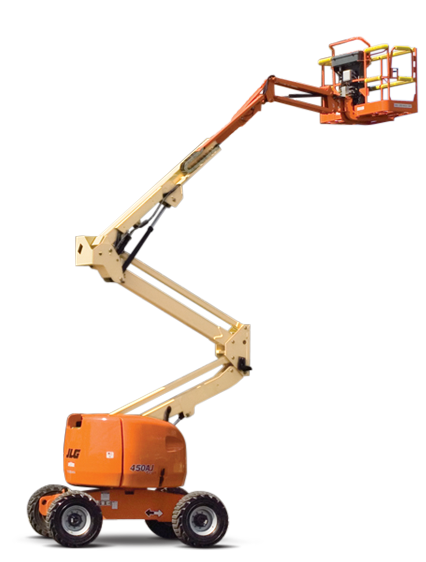
A scissor lift is a platform-based lifting machine that uses a crossed, folding support structure (resembling an open pair of scissors) to raise workers or equipment vertically. Scissor lifts are widely used in warehouses, manufacturing plants, and construction sites for maintenance work at height. They are available in electric, hydraulic, and diesel-powered variants, with platform heights typically ranging from 6 to 18 metres depending on the model.
In industrial facilities, scissor lifts often incorporate helical gearboxes in their drive mechanism to ensure smooth, controlled elevation under load.
5. Overhead Cranes and Gantry Cranes
Overhead cranes — also known as bridge cranes — run on elevated rails installed along the length of a building, allowing loads to be moved both horizontally and vertically across the entire floor area below. Gantry cranes are a freestanding variant supported by legs that run on ground-level rails, commonly used in shipyards, steel plants, and outdoor storage yards.
Overhead and gantry cranes are among the most common heavy lifting machines in Indian manufacturing. The crane gearbox — typically a helical or worm gearbox — controls the hoist drum speed and lifting torque, making gearbox selection critical for safe load handling. Santram Engineers supplies Premium Transmission gearboxes specifically suited for crane duty applications across India.
6. Hydraulic Lifts
Hydraulic lifts use pressurised fluid to generate vertical movement, making them suitable for applications requiring smooth, controlled lifting at slower speeds. They are commonly found in vehicle service centres (car lifts), goods lifts in buildings, and industrial presses. Hydraulic lifting machines offer high load capacity relative to their size and are valued for precise positioning without mechanical shock.
7. Pallet Jacks and Electric Stackers
Pallet jacks — both manual and electric — are ground-level lifting machines designed to move palletised goods within warehouses and logistics facilities. Electric stackers extend this capability by allowing goods to be lifted to rack height. These compact lifting machines are indispensable in distribution centres and cold storage facilities where forklift access may be restricted. Electric stackers typically use gear-driven motors to control lift height precisely and safely.
Types of Lifting Equipment Used in Industry
Beyond the machines themselves, industrial lifting operations rely on a broader category of lifting equipment — components and accessories that work together to complete the load handling system. Understanding the difference between lifting machines and lifting equipment helps procurement teams specify the right solution for each application.
| Equipment Type | Description | Common Applications |
|---|---|---|
| Chains & Chain Slings | Alloy steel chains used to connect loads to crane hooks | Steel plants, foundries, heavy fabrication |
| Wire Rope Slings | Flexible steel wire assemblies for load suspension | Construction, shipping, offshore |
| Shackles & Hooks | Forged connecting hardware between slings and crane | All lifting operations |
| Lifting Beams | Structural spreader beams to distribute load across multiple points | Long or fragile loads, fabrication |
| Gearboxes | Speed and torque control unit in crane hoist drive | All powered lifting machines |
| Drum Hoists | Motor-driven drums that wind wire rope to lift loads | Mining, construction, material handling |
Geared vs Gearless Lifting Machines — What Is the Difference?
One of the most common specification questions for elevator and hoist applications is whether to use a geared or gearless lifting system. The choice affects speed, energy consumption, maintenance requirements, and load capacity.
Geared lifting machines use a reduction gearbox — typically a worm or helical gearbox — between the motor and the traction sheave or drum. The gearbox reduces the motor’s high speed to the lower speed required for safe, controlled lifting while multiplying torque. Geared systems are generally more economical, easier to maintain, and well-suited for low-to-medium-speed applications such as freight elevators, hoists, and material handling cranes.
Gearless lifting machines connect the motor directly to the traction sheave without an intermediate gearbox, using a permanent magnet motor designed to operate at low speed with high torque output. Gearless systems offer quieter operation and higher energy efficiency, making them preferred for high-rise passenger lifts and precision vertical transport systems.
For most industrial lifting applications — overhead cranes, hoists, goods lifts, and material handling systems — geared configurations with worm gearboxes or helical gearboxes from Premium Transmission remain the industry standard in India. Read our detailed guide: Geared vs Gearless Lift Machines — Complete Guide.
All in all, it can be said that lift machines make it very easy to move a heavy object from one place to another. It not only makes the task easier but also saves a great deal of time.
With the right equipment, you can get more than expected results and bring in more efficiency for your business. Do you also use lift machines in your facility? Let us know which one you use by commenting in the section below.
Are You Looking for a Gearbox for Elevators or Lift Machines? You Have Come to the Right Place
Being in the industry for more than a decade, Santram Engineers specializes in providing a variety of worm gearboxes. Made using only the best material, these gearboxes improve the longevity of the machine they are used in.
Our worm gearboxes are designed to ensure minimum maintenance. Apart from occasional oil checks, they don’t demand much attention. With lubrication, they offer high speed and performance.
Following Are the Types of Worm Gearboxes You Can Source From Santram Engineers:
1. U-Type Horizontal Worm Gearbox
- Made with high-quality case-hardening steel
- Super-finished
- Accommodates overhung loads
- Needs only an occasional oil check
2. V-Type Vertical Worm Gearbox
- With dual-purpose bearings
- Accurately generated
- Low maintenance
- Offers strength
3. O-Type Over-Driven Worm Gearbox
- Durable due to rigidity
- High quality
- With dual-purpose bearings of ample capacity
- Lubrication positive at varying speeds
4. Modular Worm Gearbox
- The single case for varying sizes
- Wide variety of applications
- Offers twelve standard ratios
- Highly efficient
FAQs
What is a lifting machine?
A lifting machine is a mechanical device used to raise, lower, or move heavy loads. These machines are widely used in construction, logistics, and manufacturing industries. Many lifting systems are powered by gearboxes, which help control torque and speed, making heavy lifting more efficient and precise.
What are the different types of lifting machines?
Common types of lifting machines include:
- Cranes (tower, gantry, jib, overhead)
- Hoists (manual, electric, chain)
- Winches
- Forklifts
- Scissor lifts
- Hydraulic lifts
- Pallet jacks and electric stackers
Each of these may be powered by mechanical or electrical systems. For high-torque applications, especially in heavy weight lifting machines, industrial gearboxes play a crucial role in delivering controlled motion.
How do gearboxes contribute to lifting machines?
Gearboxes are essential in lifting systems where torque and speed need regulation. In lifting equipment, gearboxes ensure smooth load handling, prevent jerky movements, and enhance power transmission efficiency. Whether in cranes, hoists, or winches, gearboxes for lifting machines optimize mechanical performance and reliability.
What is the difference between lifting machines and lifting equipment?
Lifting machines are powered systems that perform the action of lifting, such as hoists or cranes. Lifting equipment is a broader term that includes both machines and accessories like chains, slings, hooks, and gear-driven components like gearboxes. Gearboxes are often integrated into the core mechanism of both lifting machines and equipment.
What is mechanical lifting equipment and how is it powered?
Mechanical lifting equipment operates using gears, screws, pulleys, or manual force. These systems may include gearbox-powered lifting machines where mechanical advantage is used to lift or lower loads efficiently. They are ideal for environments where electrical or hydraulic options are impractical.
What is a lifter machine and where is it used?
A lifter machine is a type of lifting machine designed to elevate materials vertically, often found in warehouses, construction sites, and industrial units. These machines frequently incorporate gearbox assemblies to control movement, especially in automated or heavy-duty applications.
What is lifting equipment used for in construction?
In construction, lifting equipment such as tower cranes, material hoists, and winches are used to handle heavy materials like steel beams and concrete blocks. Gearboxes in these systems help maintain precision and stability while managing load torque during lifting or lowering.
What factors should be considered when selecting a lifting machine?
When choosing a lifting machine, consider:
- Load capacity
- Lifting height
- Power source (manual, electric, hydraulic)
- Gearbox requirements (torque, speed ratio)
- Application environment
Selecting a lifting solution with the right gearbox configuration ensures optimal performance and long-term durability.
Are gearboxes customizable for lifting equipment applications?
Yes, gearboxes for lifting machines can be customized based on torque, load capacity, and operational speed. At Santram Engineers, we provide tailored industrial gearbox solutions for lifting machines used in construction, mining, material handling, and more.
Is there a standard checklist before using lifting machines?
Yes, a lifting equipment list or checklist should include:
- Gearbox condition and lubrication level
- Brake system inspection
- Load chain or wire rope integrity
- Safety latch and hook checks
- Load capacity confirmation
Regular inspection of gearbox-driven lifting machines ensures safe and efficient operations.
For expert guidance on selecting the right gearbox for your lifting machine or material handling application, contact Santram Engineers — India’s No.1 authorised Premium Transmission dealer with 40+ years of crane and hoist gearbox experience. We supply worm gearboxes, helical gearboxes, and geared motors for all types of lifting machines — PAN India delivery from 7 locations.
Call us at 09824011795, 09924711556, or 9624739393 or email sales@santramengineers.com
